


27 Aug Paths of Memory, Paths of Healing: Shipibo-Konibo Kene Art

Paths of Memory, Paths of Healing: Shipibo-Konibo Kené Art
Opens Nov 6, 2026
Paths of Memory, Paths of Healing: Shipibo-Konibo Kené Art invites visitors into the vibrant world of Shipibo-Konibo artist Olinda Silvano. Her intricate kené designs—flowing geometric patterns rooted in ancestral knowledge—are more than visual art: they are pathways of connection, memory, and healing. As Olinda Silvano paints, she sings, activating each line with sound and intention, transforming the space into an immersive sensory experience.
We invite you to journey through the artist’s mural, alongside ceramic and textile works from the Fowler Museum’s collection, all featuring kené patterns. Together, these elements create a continuous path to explore—one that visitors can see, hear, and feel. Through this interplay of art and music, the exhibition offers an accessible and moving encounter with Indigenous creativity and the enduring power of healing through art.
About the artists:

Olinda Silvano is a Shipibo-Konibo artist and cultural leader who lives and works in the Amazonian community of Cantagallo, in Lima. From this urban Indigenous community, she has built a powerful bridge between ancestral memory and contemporary artistic practice.
Her work spans textiles, painting, and, most prominently, large-scale murals, through which she transforms kené—the sacred design system of the Shipibo-Konibo—into a monumental visual language. Composed of intricate geometric patterns that embody songs of protection and healing, kené is, for Olinda Silvano, a living language that expresses and transmits the Shipibo-Konibo worldview.
Through her practice, these ancestral designs move beyond the body and traditional weaving, expanding onto walls, public spaces, and museum contexts in acts of cultural affirmation and resistance. Her work not only preserves but also reactivates Indigenous knowledge within contemporary global art dialogues.
In addition to her artistic practice, Olinda Silvano is a prominent leader, cultural manager, and advocate for Shipibo-Konibo culture. She previously served as president of the AYLLU association and as a representative of Andean and Amazonian women. She is currently a member of SOI NOMA, a Shipibo-Konibo research center and graphic arts workshop. She serves as president of the Association of Possession Holders of the Cantagallo Artisanal Industrial Park in Rímac (Achushicolm).
Olinda Silvano has participated in major contemporary art platforms, including the Montevideo Biennial (Uruguay, 2025), the Bienal de la Amazonía (2025), and ARCO Madrid (Spain, 2019 and 2025). Her work has also been featured in exhibitions such as Rivers Can Exist Without Water, But Not Without Shores (Museum of Contemporary Art, Lima, 2022) and Mother Plants and Fighting Women: Visions from Cantagallo (MAC Lima, 2022), for which she also served as co-curator. Earlier, she participated in The Seeds of the Gods: Entheogenic Art of the Peruvian Amazon (Casa Perú, Russia, 2018).
In recognition of her cultural contributions, Olinda Silvano was named a Meritorious Personality of Culture by the Ministry of Culture of Peru in 2018. She has also received distinctions from the Congress of the Republic and the National University of San Marcos.

Erick (Ronin) Arias Silvano, also known as Ronin Koshi, is a Shipibo-Konibo artist, communicator, and Indigenous cultural activist from the Cantagallo community in Lima. He learned kené art, oral traditions, and Shipibo-Konibo ways of understanding the world through his family and community, particularly from his mother, renowned artist and cultural leader Olinda Silvano. His multidisciplinary practice encompasses mural painting, textiles, audiovisual media, storytelling, and collaborative public art. His projects include Tañan Kené at the Museo de Arte de Lima, a monumental work created collectively by Shipibo-Konibo artists. Through visual art and communication, Ronin Silvano shares Amazonian histories, ancestral knowledge, and the spiritual beings that inhabit Shipibo-Konibo cosmology. His work creates connections between inherited knowledge and contemporary forms of expression while emphasizing art as a vehicle for cultural continuity, collective memory, and community visibility. He is especially committed to transmitting this knowledge to younger generations and encouraging them to value, practice, and reimagine their cultural traditions.

Sadith Esther Silvano Inuma is a Shipibo-Konibo visual artist, fashion designer, singer, entrepreneur, and Indigenous leader. Originally from the Amazonian community of Paoyhan and now based in Cantagallo, Lima, her practice brings together kené, ancestral songs, and knowledge transmitted across generations. Working through textiles, clothing, and murals, she connects design and song with memory, nature, healing, and collective identity while promoting cultural continuity and opportunities for younger generations.
Sadith Silvano’s artistic, cultural, and social contributions have received national and international recognition. She was named Peru’s Eco-Artisan Woman in 2016 and was recognized by the Congress of Peru in 2019 for supporting the empowerment of Peruvian mothers. She received an Entrepreneurial Tourism Award from Peru’s Ministry of Foreign Trade and Tourism in 2020 and a Ministry of Culture grant to produce the album Cantos del Kené in 2021. She later studied human rights, Indigenous peoples, and international cooperation at Universidad Carlos III de Madrid. In 2024, she participated in the Australian Aid–supported Growing Indigenous Businesses Through Trade program; and in 2025, Forbes Peru named her one of the country’s fifty most powerful women.
Upcoming Programs
Past Programs
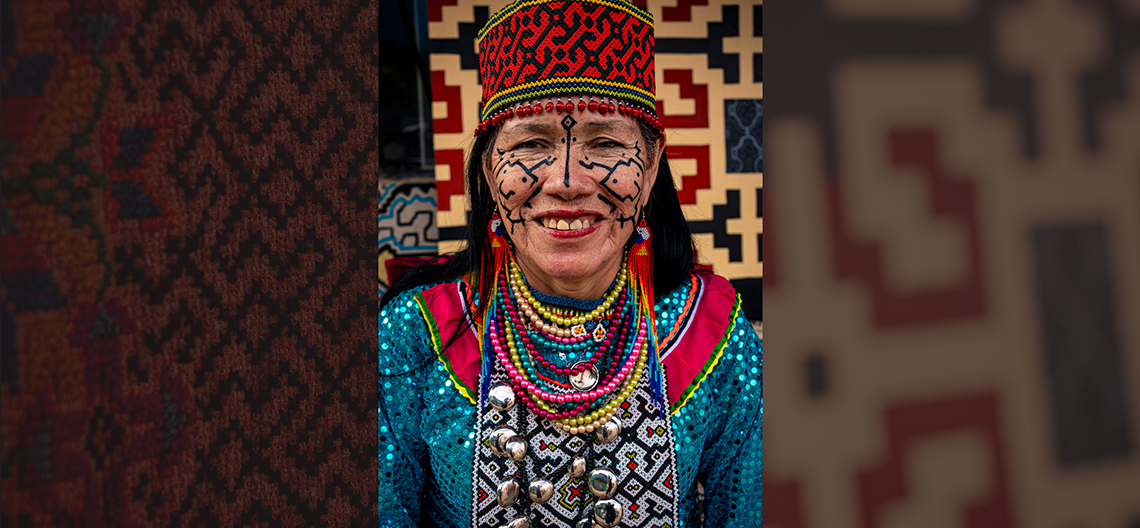
Wine with the Artist: Olinda Silvano
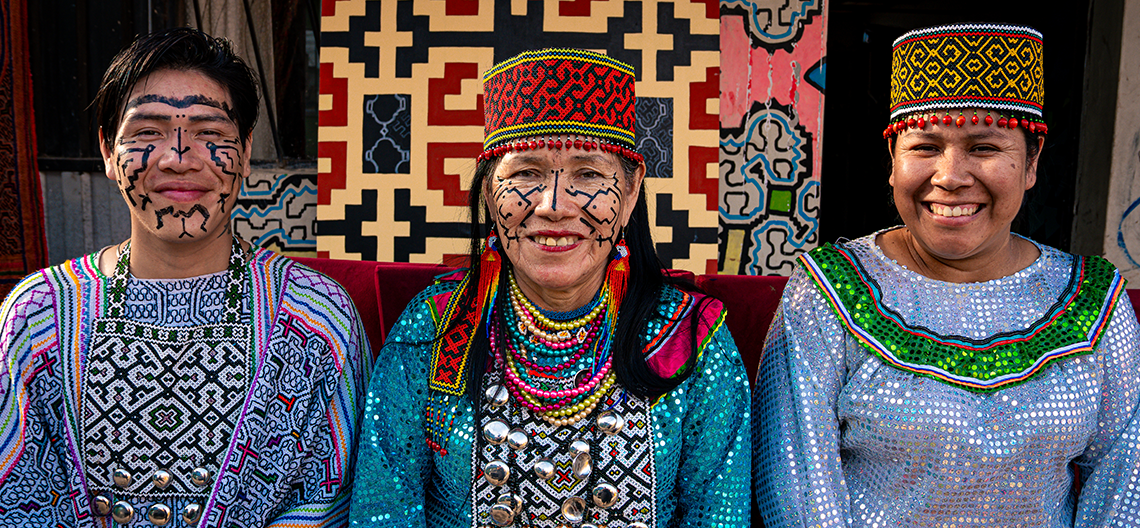
Artist Talk: Olinda Silvano, Erick (Ronin) Arias Silvano, and Sadith Esther Silvano Inuma
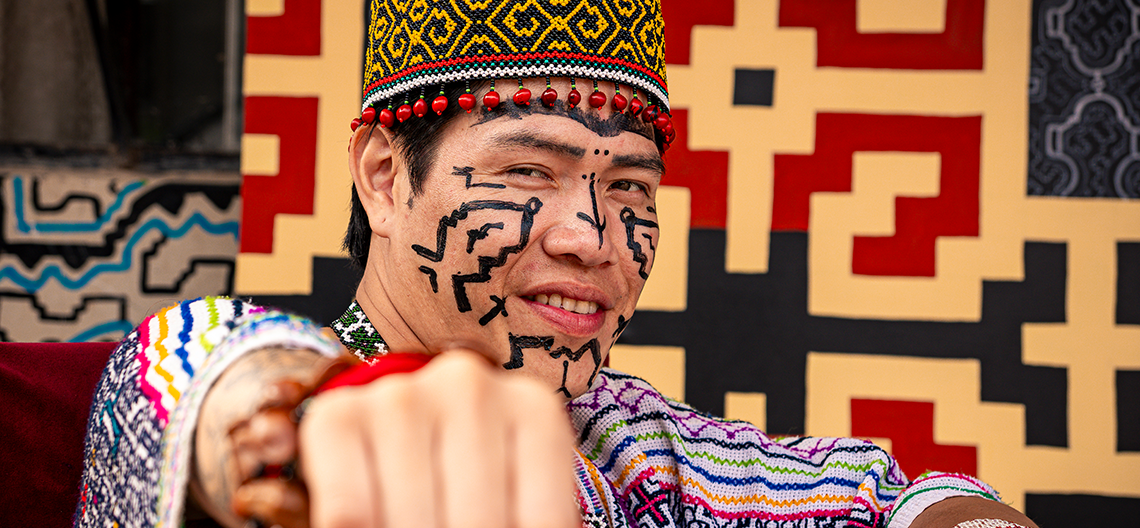
Story Time: Amazonian Myths and Kené

Artist Workshop: Kené Drawing and Living Designs with Olinda Silvano
This program is co-presented by the Fowler Museum, UCLA CMRS Center for Early Global Studies, UCLA American Indian Studies Center, UCLA Latin American Institute at UCLA, “Race in the Global Past through Native Lenses” Grant, and the Consulate General of Peru in Los Angeles.”



Sorry, the comment form is closed at this time.