Panel Discussion: Fire, Land Stewardship, and Indigenous Conservancy
IN PERSON
Presented in conjunction with the Fire Kinship exhibition at the Fowler Museum at UCLA, this panel will bring together Indigenous scholars, fire practitioners, and land trust leaders to explore the role of land conservancy in the broader Land Back movement.
Focusing on fire as both a cultural practice and an ecological tool, the discussion will examine how Indigenous-led conservancies are reclaiming stewardship through legal frameworks that support the return of land and the revitalization of ancestral care practices. Panelists will share case studies, community-led strategies, and the challenges of putting fire back on the ground in landscapes where cultural burns were once suppressed.
Together, we will consider how land trusts and conservancies can be leveraged to return jurisdiction to Indigenous nations, support fire-based stewardship, and foster cultural and ecological renewal.
Moderator
Daisy Ocampo Diaz (Caxcan, or Caz’ Ahmo, Indigenous Nation of Zacatecas, Mexico) earned her Ph.D. in history from the University of California, Riverside in 2019. Her work in Native and public history informs museum exhibitions, historic preservation initiatives, and community-based archives. Through the integration of critical race theory, decolonial praxis, and tribal sovereignty, she centers Indigenous voices and traditions in public history to create more inclusive and community-rooted narratives.
Panelists
Elizabeth Paige is a desert naturalist and a citizen of the Torres Martinez Desert Cahuilla Indians. She is committed to cultural preservation and to supporting Indigenous leadership in science and conservation. Paige currently serves as the Education and Stewardship Program Manager for the Native American Land Conservancy (NALC).
Michael Madrigal is a citizen of the Cahuilla Band of Indians and the current board president of the Native American Land Conservancy. His work focuses on protecting and revitalizing the cultural and spiritual relationships between tribal communities and their ancestral homelands. He is a Ph.D. student in Native American and ethnic studies at the University of California, Riverside and is deeply influenced by the teachings of tribal elders and their dedication to preserving Indigenous knowledge.
Charles A. Sepulveda (Tongva and Acjachemen) is an assistant professor of ethnic studies at the University of California, Riverside. His first book, Native Alienation: Spiritual Conquest and the Violence of California Missions (University of Washington Press, 2024), examines the ongoing impacts of missionization in California. Sepulveda is a board member of the Tongva Taraxat Paxaavxa Conservancy, the Acjachemen Tongva Land Conservancy, and the Sacred Places Institute for Indigenous Peoples. His work, both scholarly and community-based, advocates for Land Back and Indigenous self-determination.
This program is presented in partnership with the Native American Land Conservancy, Tongva Taraxat Paxaavxa Conservancy, Acjachemen Tongva Land Conservancy.


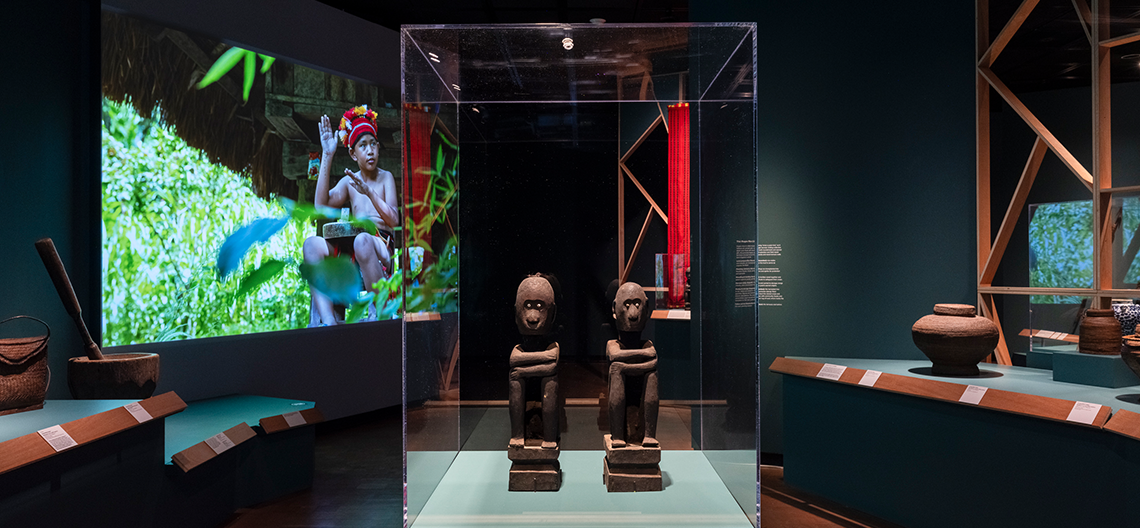
Photo credit: Installation view, Fire Kinship: Southern California Native Ecology and Art, 2025, Fowler Museum at UCLA. Photo Elon Schoenholz